
Wastewater · buyer decision guide
Wastewater Phosphorus Removal: Choose the Feed Point and Separation Test
Choose an industrial wastewater phosphorus-removal route by the phosphorus fraction that must change and the equipment that will remove the resulting solids. Start with matched total phosphorus, filtered fractions and reactive-phosphorus results, together with pH, alkalinity and the current treatment layout. Compare iron- and aluminum-based candidates at credible feed locations, then measure final separated water and the sludge burden. A lower reactive-phosphorus reading after mixing can reflect transfer into particles that still leave with the effluent. Evaluate polyacrylamide separately as a flocculation or capture aid. Select a route only after a representative settling, flotation or filtration test shows how reaction, solids capture and sludge handling work together under the site's actual water conditions.
TL;DR
Keep phosphorus chemistry and solids removal as two linked decisions. Define total, dissolved and reactive measurements with the laboratory, preserving filtration, digestion, units and sampling time. Compare candidate iron or aluminum chemistry using the real alkalinity, competing constituents, mixing sequence and feed locations. Follow each candidate through the installed separator and sludge route, measuring final total phosphorus as well as the relevant dissolved fraction, solids, residual metals and equipment response. Add PAM only to answer a defined flocculation or capture question. Choose by the combined water-and-sludge endpoint, then confirm the useful route across representative operating conditions before requesting an exact grade.
Define the phosphorus result before choosing a chemical
Ask the laboratory to put the analytical boundary beside every result. Total phosphorus normally requires the specified digestion of an unfiltered sample. A dissolved result depends on the agreed filtration method and when filtration occurred. Reactive phosphorus is an operational analytical result commonly used to assess orthophosphate; it should not be silently substituted for total phosphorus or assumed identical to every dissolved fraction. Confirm whether the report expresses phosphorus as P or as phosphate before comparing samples.
For an industrial stream, include the production source, cleaning cycle, storage history and sample location. Collect paired samples before treatment and after the actual solids separator. Where the question needs it, take an intermediate sample after reaction. Preserve the method, dilution, handling and holding-time instructions given by the laboratory, especially when color, salts or metals may interfere. Keep a filtered result and its corresponding unfiltered result from the same sampling event.
Read the pattern as a question to investigate. If reactive phosphorus falls after reaction but final total phosphorus stays high, examine particle capture and the unmeasured fractions. If filtration changes the result substantially, solids-associated phosphorus deserves attention. If a dissolved fraction persists, ask whether the chosen chemistry addresses that fraction under the actual conditions. The laboratory's method definitions and uncertainty determine how confidently those differences can be interpreted.
Build a baseline around the proposed feed location
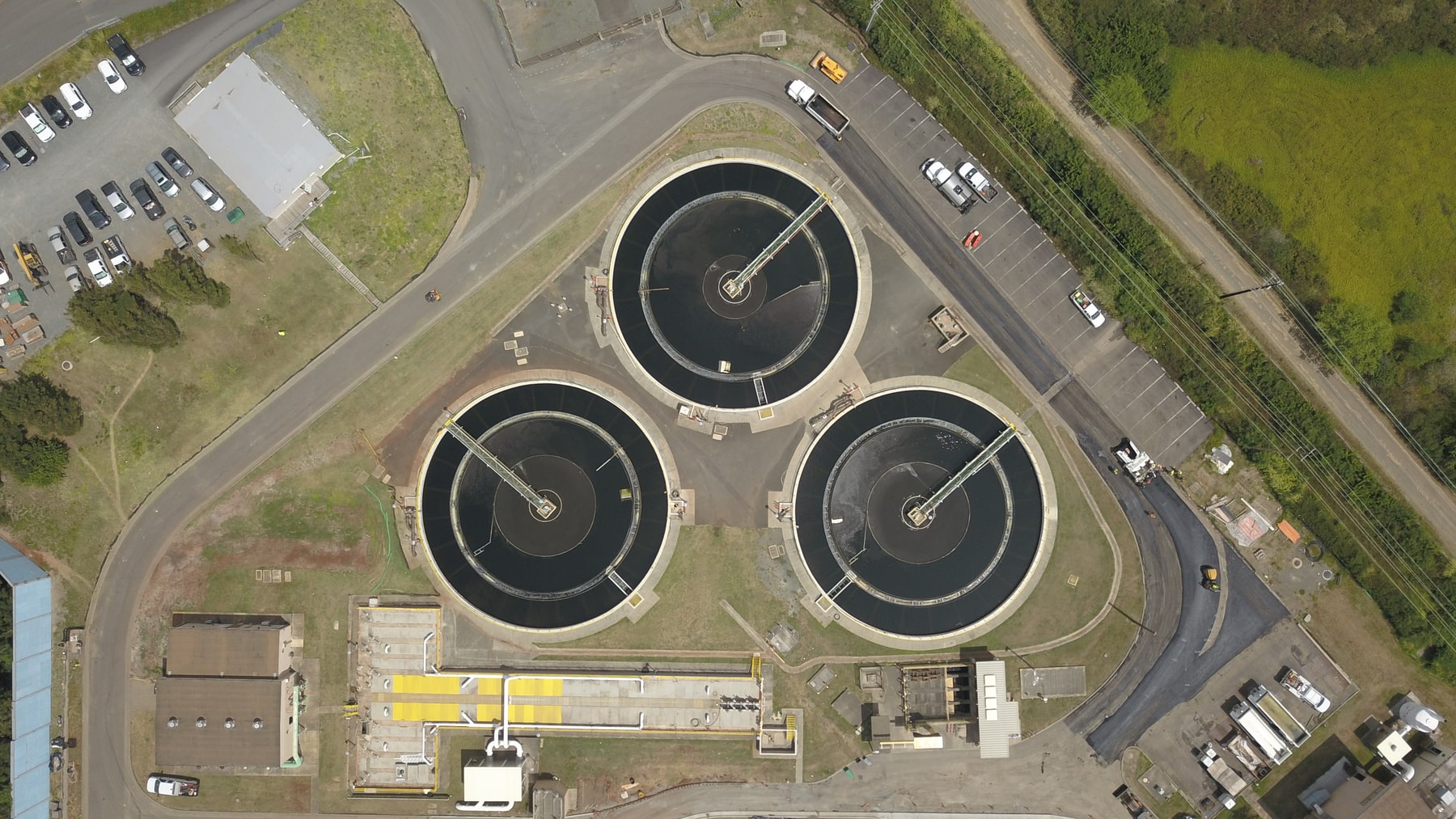
Draw the train from incoming wastewater through equalization, biological treatment where present, chemical mixing, flocculation, separation and sludge export. Mark existing additions and every return entering between the proposed feed point and the final sample. A sample upstream of a sludge-liquor return represents a different feed from a sample downstream. Use the return-liquor load investigation when the burden changes with solids-handling events.
Record pH and alkalinity together. Include phosphorus fractions, suspended solids and relevant organics, background iron or aluminum, salinity and temperature. Select additional analyses from the actual production chemistry rather than ordering an indiscriminate panel. Give the trial team current chemical identities and documents, addition order, mixing conditions, available reaction time and the design of the downstream separator. A changed final pH is part of the candidate response, not an incidental observation to omit.
Keep the existing biological process and downstream use in the comparison. Moving a metal-salt addition upstream may change where solids are created and where organic material or nutrients are captured. Moving it downstream changes the remaining contact and capture opportunities. The relevant question is which arrangement fits this plant's treatment and sludge tasks, including any reuse requirement, rather than which location appears simplest on a sketch.
| Candidate route | Question to test | Evidence needed before selection |
|---|---|---|
| Iron-salt route, externally sourced and documented | Does this formulation address the measured P fraction at an available feed location? | Post-reaction and final fractions, pH/alkalinity response, residual iron, capture and sludge handling. |
| Aluminum-salt route, including a documented PAC candidate | Does the actual formulation fit this matrix and downstream process? | Same methods and endpoint as the iron comparison; residual aluminum and the complete sludge path. |
| PAM after a supported coagulation/precipitation step | Does a candidate improve floc structure or capture under representative shear? | Final solids/TP, filter or flotation response and sludge separation; retain a no-polymer control. |
| Feed-point or separation correction | Is the remaining problem contact, mixing or solids escape? | Matched chemistry with changed process condition; repeat final effluent and equipment observations. |
Compare metal-salt routes without turning a family name into a grade
Iron- and aluminum-based chemicals are established engineering alternatives for phosphate precipitation and associated solids capture. Their useful behavior depends on formulation, wastewater composition and process conditions. Background metal, competing reactions and the buffering response can change the trial result. Use equivalent, documented reporting bases when comparing candidate additions; a volume of commercial liquid or a product price alone leaves its active composition unresolved.
The site has a real PAC product identity page. Request current grade information before including a specific candidate. The partial product fact database supplies no verified phosphorus-removal dose or performance for that grade. Iron chemistry in this guide is an external technical alternative; no iron SKU, stock position or current supply capability is inferred from the comparison.
Use PAM to investigate a separate aggregation or separation task where the mechanism and current grade documents support it. Keep the underlying precipitation route identifiable and compare a control without polymer. A visibly larger floc may be useful for one separator and fragile or obstructive in another. Measure the separated water and sludge response rather than assigning chemical-phosphate removal to the polymer from appearance alone.
Design a feed-point trial that resembles the plant
Begin with one written decision: for example, whether a downstream polishing location provides a better combined water-and-sludge result than an existing upstream addition. Use fresh, representative feed and record the operating state behind it. Retain the current program as a control. Separate changes in candidate chemistry, feed location and polymer assistance so that the result can identify which change mattered. Include relevant production variation in the sampling plan.
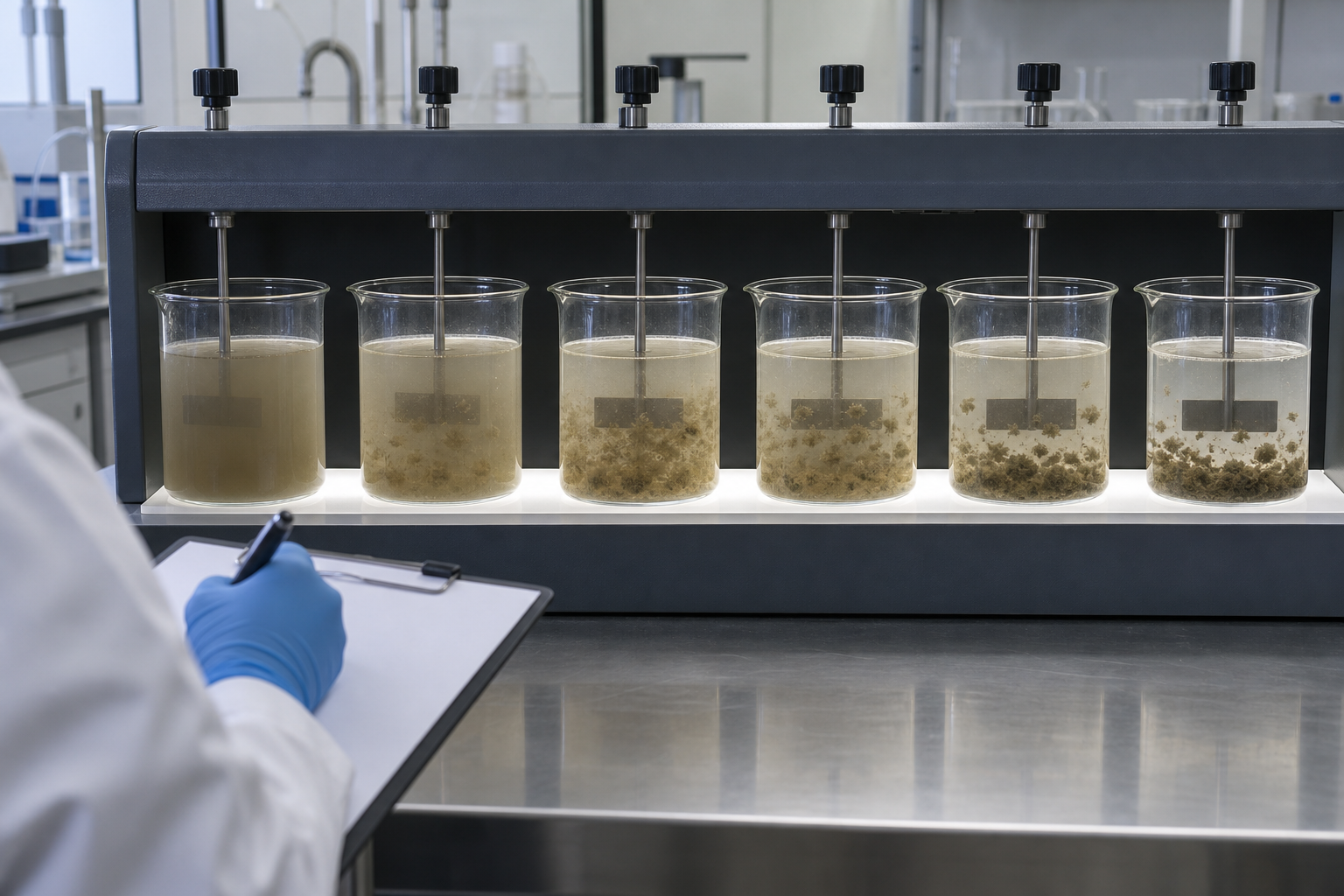
Reproduce the available rapid distribution, subsequent flocculation, shear and time to separation as closely as the test equipment allows. Record the actual order of additions and when samples are drawn. A jar left undisturbed until it looks clear can conceal a lack of residence time or shear resistance in the plant. A plant with flotation needs a flotation-relevant endpoint; a settling test alone answers a narrower question.
For settling, compare the representative supernatant and the behavior of the resulting sludge. For flotation, include appropriate bubble contact, float capture and water sampling. For filtration, follow a defined throughput or run condition, effluent solids and phosphorus, pressure response and cleaning implications. Have the responsible equipment team define the valid simulation and acceptance conditions. Test interpretation should state which parts of the plant were reproduced and which still require pilot or site confirmation.
Use a compact worksheet for every run: feed source/time and analyses; product identity and reporting basis; pH/alkalinity before and after treatment; feed sequence, mixing and residence; separation settings; final analytical fractions and solids; sludge condition; and observed equipment response. Record blanks, replicates and analytical checks where needed. Compare alternatives within the known sample and method variability rather than naming a winner from an isolated small difference.
Follow the sludge and the material that returns
Phosphorus transferred from water into a captured solid has entered another process stream. Record where that solid is removed, held, thickened, dewatered or returned. Compare settling or flotation sludge, filtrate quality, handling demand and the available disposal or recovery route. A treatment choice that improves the final water while destabilizing the solids train needs a whole-process review before adoption.
Keep a simple phosphorus inventory across incoming wastewater, exported sludge, outgoing water and material held within the system. Include relevant return liquors without counting an internal transfer as a new external input. Where biological treatment or digestion changes phosphorus form, use appropriate sampling and specialist interpretation. Look for recurring burdens after sludge processing; a successful short trial may not have exposed the later return.
Set the acceptance basis with the actual permit or sewer agreement, including sampling point, averaging period, analytical method and other affected conditions. Government design guidance offers useful mechanisms and planning principles, but its example limits and doses are not a global industrial specification. Review downstream reuse and residual-metal requirements with the responsible site team as part of the same decision.

Turn the evidence into a useful product discussion
Use the coagulants and flocculants category as the commercial starting point after the remaining treatment task is clear. The water-treatment application provides related solids-separation context; industrial source chemistry and authorization still define this trial. Existing generic jar-test guidance is a supporting procedure, not a substitute for the phosphorus endpoint described here.
For an exact-grade inquiry, send the matched fraction results and methods, water matrix, current and proposed feed locations, separator and sludge constraints, current documents and the objective of the comparison. Add quantity, packaging preference and destination if requesting a quotation. Ask which candidate is supported for testing and what additional evidence is needed before selection. That creates a practical next step without inventing a dose or guaranteeing compliance.
Frequently asked questions
Does clear wastewater show that phosphorus was removed?
No. Appearance does not identify the remaining phosphorus fractions. Compare final total phosphorus and relevant dissolved/reactive results with the agreed methods and the actual separation endpoint.
Can PAM replace a phosphorus precipitant?
Evaluate PAM as an aggregation or solids-capture aid where supported by the current grade and process. Do not assign phosphate-precipitation performance to a PAM label or a visibly large floc.
Where should the phosphorus-removal chemical be added?
Compare available locations against the incoming phosphorus fractions, competing reactions, biological-process needs, mixing, contact and downstream separation. Representative testing and the whole sludge path determine the useful location.
Is PAC always preferable to an iron salt?
No universal ranking applies. Compare documented candidates using the same wastewater, analytical basis, final separation and sludge endpoints. Current grade evidence is required; an external iron comparison does not establish VCYCLETECH iron supply.
What should a phosphorus-removal trial measure?
Record feed and final phosphorus fractions, methods and units, pH/alkalinity, relevant residual metals, solids capture, sludge behavior and equipment response. Confirm the selected route across representative operation and the actual authorization basis.
مسار تقني ذو صلة
- Product range: Coagulants & Flocculants: Match Water and Separation
- Product: بولي أكريلاميد (PAM) — الشركة المصنعة والمورد
- Guide: Sludge Return Liquor & Coagulation Upsets
- Guide: الاتصال