
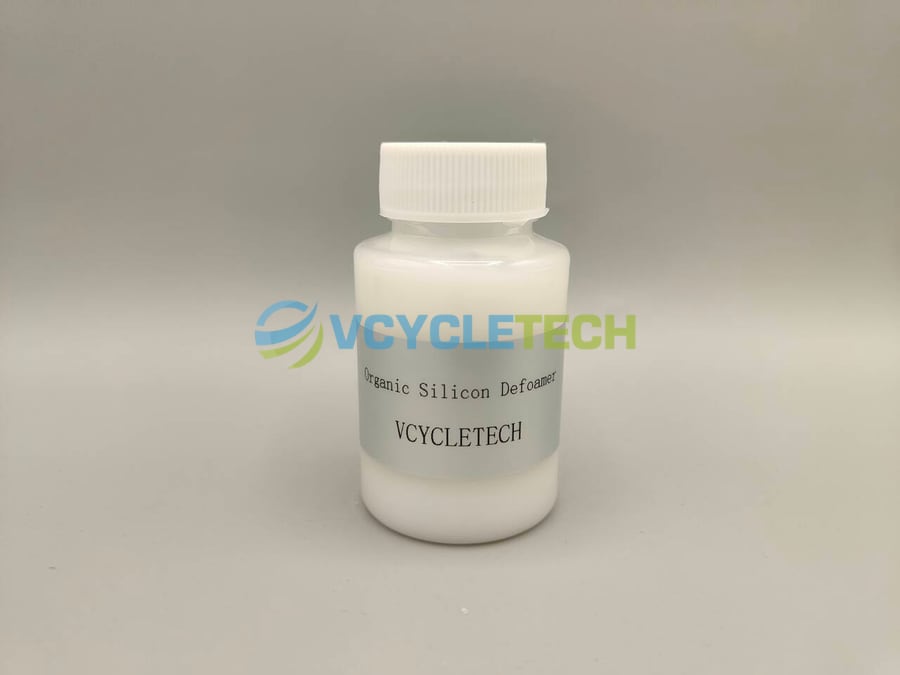
Silicone Defoamer
TL;DR This catalog product is a silicone-emulsion defoamer, with a white to light-yellow appearance, weak-anionic emulsion identity and published pH reference of 6.5–8.5. A silicone formulation is distinct from a polyether antifoam; emulsion form and process compatibility matter alongside concentration.
Selection and quotation
When comparing the silicone emulsion with a polyether alternative, record the foam recurrence as well as initial knockdown. Check downstream filtration, deposits and product quality on the same process liquid.
Selection inputs
- Foam versus entrained-air symptoms
- Process water and temperature
- Addition point, residence time and shear
- Downstream filtration, coatings or product-quality needs
Documents and supply
Send the required specification, quantity, packaging and destination. Request the current TDS and SDS for the offered grade, and confirm which batch documents are available.
Technical documents · Company certificate scopes
Request a quoteSelect a silicone emulsion for the actual preparation and feed path
The catalog identifies a white to light-yellow silicone emulsion with a weak-anionic emulsion character and a supplied-product pH reference of 6.5–8.5. Confirm the current offered grade and measurement basis. That pH reference does not define every receiving process window, and the family name does not establish universal dilution or material compatibility.
Before a sample trial, identify whether the installation needs pre-dilution, the actual preparation water, day-tank holding and restart conditions, mixing and delivery equipment. Compare physical condition separately from initial foam reduction, recurrence and downstream filtration, deposits or product-quality effects. Use the silicone defoamer dilution, holding and pump-trial guide to separate preparation changes from process response.
Request a documented candidate and quotation
Send the process liquid and foam symptoms, relevant water analysis, temperature and pH, other chemical additions, feed point, equipment, trial endpoints, quantity, packaging and destination. Request the exact grade's current TDS/SDS, available batch documents and supported preparation instructions; do not assume a universal dilution ratio or holding time.
Compare defoamer families · Review the separate polyether candidate · Discuss a silicone defoamer sample or quotation
Catalog reference specifications
These are published catalog references, not a current batch COA. Match the offered grade and measurement basis before comparing offers.
| Type | Organic silicon (silicone) emulsion defoamer |
|---|---|
| Appearance | White or light-yellow emulsion |
| Composition | Polysiloxane / modified polysiloxane / silicone resin / silica (SiO₂) / dispersant / stabilizer |
| Emulsion ionic type | Weak anionic |
| pH | 6.5 – 8.5 |
Compare the application
Identify stable surface foam versus entrained air, then reproduce the actual liquid, temperature, mixing and feed point. Compare foam suppression, recurrence, deposits, filtration and finished-product quality. The silicone family name does not establish harmlessness or an unlimited temperature or pH window.
Frequently asked questions
What does the catalog specify?
This catalog product is a silicone-emulsion defoamer, with a white to light-yellow appearance, weak-anionic emulsion identity and published pH reference of 6.5–8.5. A silicone formulation is distinct from a polyether antifoam; emulsion form and process compatibility matter alongside concentration.
What should I send for a quotation?
Send the product or model, required specification, quantity, packaging and destination. Include the application and current product, if known. Confirm the available TDS, SDS, batch documents, storage conditions and commercial delivery terms for the actual offer.
Related: Polyether Defoamer · All defoamers · Water Decoloring Agent · PAM