
Shipment
Benzalkonium Chloride Shipment: BKC 50% and 80% Checks
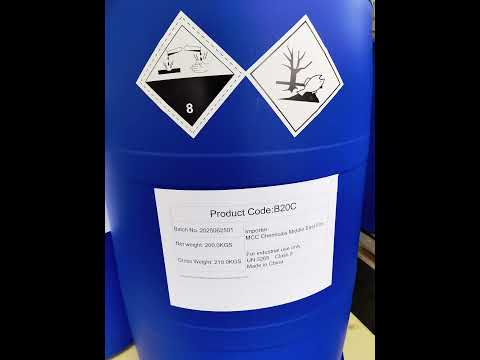
This shipment video connects packaged benzalkonium chloride to the buying checks for BKC 50% and 80% grades. VCYCLETECH’s current product table lists active content at 48.0–52.0% for the 50% grade and 78.0–82.0% for the 80% grade, with pH 6.0–8.0 for both as a 1% aqueous solution. Buyers should name the selected concentration on the purchase order, match the batch COA and labels, verify package count and net mass, and review the SDS, compatibility, permitted industrial use and destination documents before release.
Watch on YouTube Published
What this video shows
Use this BKC shipment video to check package and dispatch context, then release the order from the exact grade documents. VCYCLETECH's benzalkonium chloride page lists 50% and 80% grades with active-content ranges of 48–52% and 78–82%, both at pH 6–8 for a 1% aqueous solution. The batch COA should identify the shipped grade and lot.
Match the concentration to the order
The exact BKC product page identifies benzalkonium chloride as BKC or DDBAC and lists CAS references 8001-54-5, 63449-41-2 and 139-07-1. Its specification table separates the two concentration grades. Put the selected grade, active-content range and pH range on the signed specification rather than using “BKC” alone.
For each shipped lot, compare the COA result with those agreed limits and the label concentration. Where a customer's specification adds other tests, those limits should also appear on the purchase order and COA template.
Packaging and compatibility checks
The product page states 25 kg or 200 kg plastic drums. Confirm the actual package, closure, net mass, palletization, labels and seal requirements for the destination. BKC is a cationic surfactant; the product instructions state that it should not be blended with anionic surfactants, so receiving and formulation plans should account for chemical compatibility.
Request the current SDS for handling and storage. Avoid carrying broad end-use claims from a shipment clip into regulated disinfection, pharmaceutical, cosmetic or potable-water uses; those require their own product authorization and end-use assessment.
Shipment release file
- Grade-specific specification and quotation.
- Current SDS and batch-linked COA.
- Package count, net mass, lot and label reconciliation.
- Packing list and destination transport documents.
- Application instructions for the intended industrial system.
Qualify BKC for the intended system
Name the industrial use and water system on the enquiry. Provide volume, temperature, pH, organic load, current oxidants or non-oxidizing biocides, surfactants and the monitoring method. Compatibility and the permitted use pattern should be checked for the destination and application before a concentration grade is chosen.
For a controlled trial, keep the delivered active concentration separate from the in-system treatment concentration. Record the batch, dilution method, feed point and monitoring results. Review the SDS and site risk controls with operators handling the concentrate. These steps connect the shipment documentation to a defined industrial use without treating package footage as an efficacy or regulatory authorization. Keep the approved use instruction with the receiving and dosing records.
Product and process details
These fields summarize the product, process or shipment context shown in the video and linked catalog.
| Field | Value | Source |
|---|---|---|
| Catalog grades | Approximately 50% and 80% | Product page |
| Appearance | Colorless-to-pale-yellow or light-yellow transparent liquid | Product page |
| Active content | 48.0–52.0% or 78.0–82.0% | Product page |
| Amine salt | ≤2.0% | Product page |
| pH | 6.0–8.0 for a 1% aqueous solution | Product page |
| Catalog packaging | 25 kg drums, 200 kg drums or 1,000 kg IBC totes | Product page |
BKC 50% vs BKC 80%
Select the concentration from the exact formulation, handling and logistics requirements.
| Specification | Grade I, ≈50% | Grade II, ≈80% |
|---|---|---|
| Appearance | Colorless-to-pale-yellow transparent liquid | Light-yellow transparent liquid |
| Active content | 48.0–52.0% | 78.0–82.0% |
| Amine salt | ≤2.0% | ≤2.0% |
| pH, 1% solution | 6.0–8.0 | 6.0–8.0 |
| Release evidence | Grade-specific COA | Grade-specific COA |
BKC grade-to-shipment flow
What should a BKC enquiry specify?
The concentration grade is only one field; industrial use, formulation compatibility and destination requirements complete the decision.
- Industrial system and intended use
- Required 50% or 80% grade
- Current oxidants, biocides and surfactants
- Package, quantity and destination
- SDS, COA, label and regulatory document requirements
Common questions
What BKC grades are listed on the product page?
The current table lists approximately 50% and 80% grades.
What are the listed active-content ranges?
The 50% grade is 48.0–52.0%; the 80% grade is 78.0–82.0%.
What pH range is listed for both grades?
Both columns list pH 6.0–8.0 for a 1% aqueous solution.
Can BKC be mixed with every surfactant?
The product instructions identify BKC as cationic and advise against blending it with anionic surfactants.
How can a buyer request a BKC quote?
State the exact grade, industrial use, package, quantity, destination and required batch documents.